Elena Richter · 24 September 2026
Revenue Recovery Tactics Employed by Digital Platforms After Technical Migrations
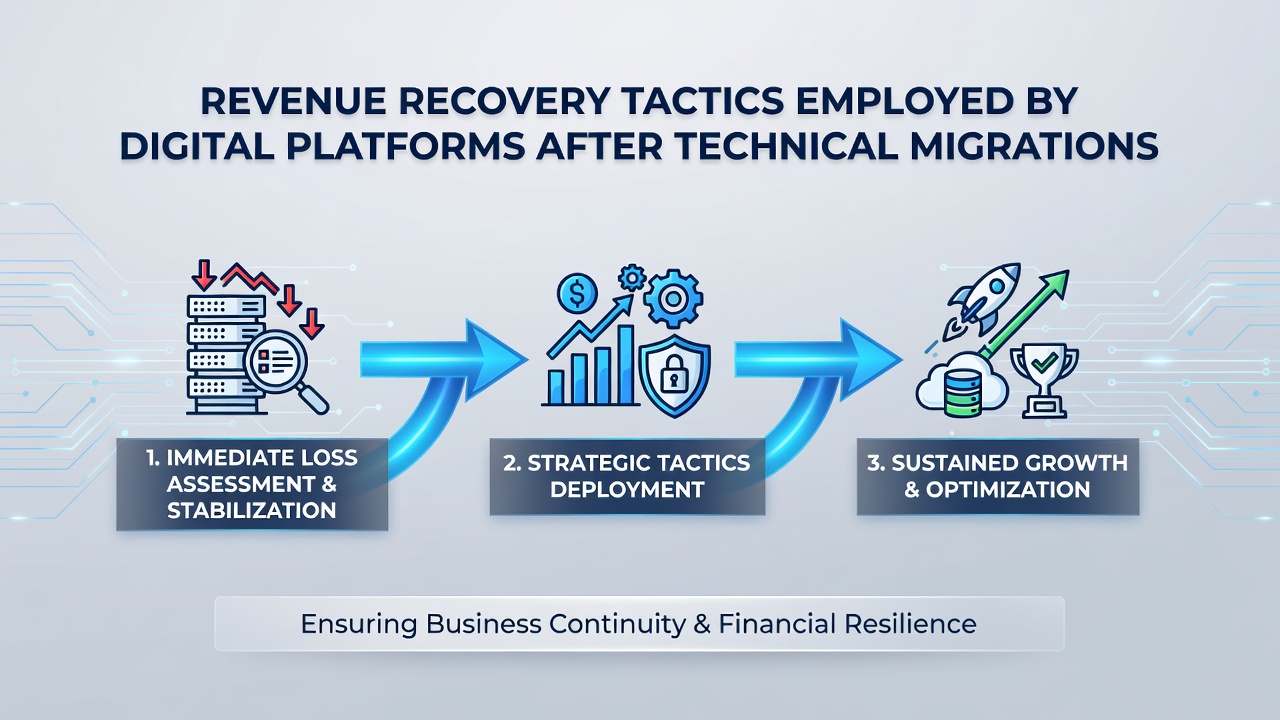
Digital platforms that complete major technical migrations often face revenue shortfalls from downtime, user friction, and data inconsistencies, yet many organizations counter these effects through structured recovery approaches that restore income streams within weeks or months. These tactics focus on minimizing churn, reactivating lost transactions, and optimizing post-migration systems for sustained performance.
Common Challenges During Platform Migrations
Technical migrations involve shifts in cloud infrastructure, database architectures, or payment gateways, and each change carries risks of interrupted services that directly affect billing cycles and subscription renewals. Companies report that even brief outages during these periods can reduce monthly recurring revenue by double-digit percentages, particularly when checkout processes or user accounts experience synchronization delays. Research from institutions tracking digital commerce shows that platforms migrating core systems in 2025 encountered average recovery timelines of 45 to 90 days before revenue returned to baseline levels.
Pre-Migration Preparation Strategies
Organizations prepare for migrations by freezing major pricing changes and running parallel payment systems to catch discrepancies before they impact customers. Teams segment user bases according to transaction history, allowing targeted outreach that highlights upcoming improvements while offering temporary credits to high-value accounts. In the lead-up to infrastructure updates planned around September 2026, several enterprise platforms have begun testing these segmentation models on smaller user cohorts to refine messaging and incentive structures ahead of full-scale transitions.
Post-Migration Revenue Reactivation Methods
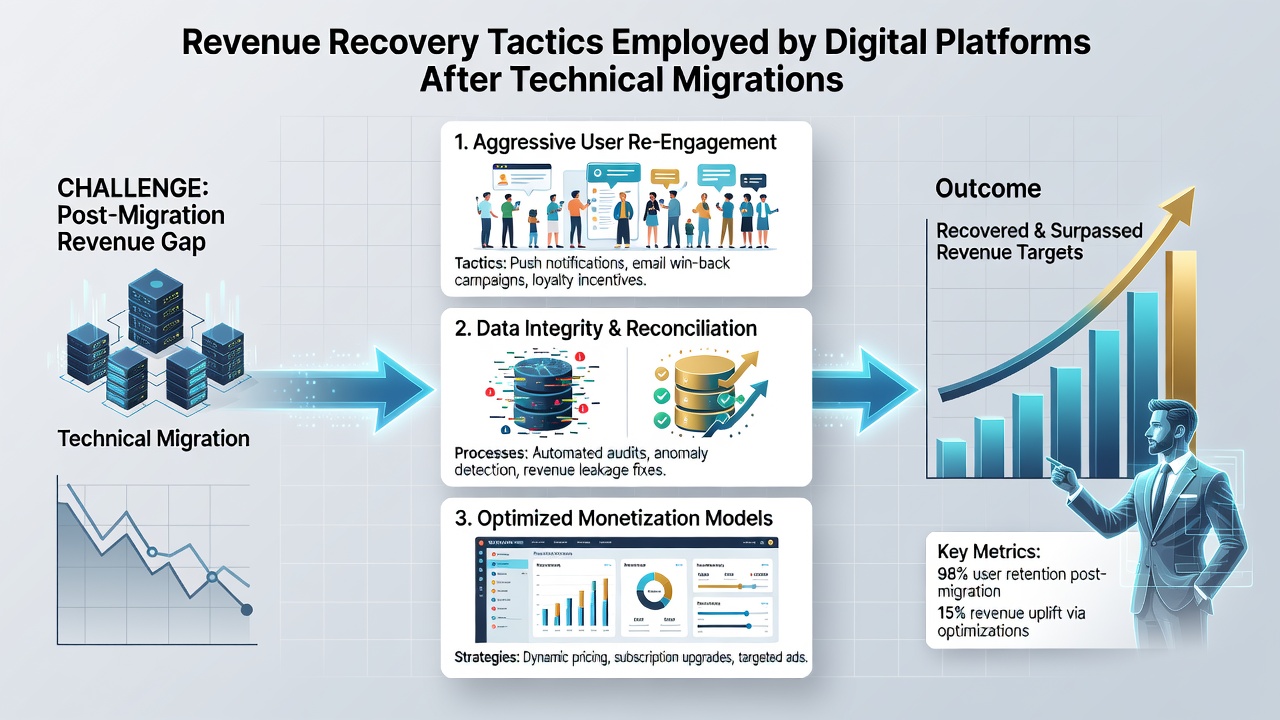
Once migrations conclude, platforms deploy automated email sequences that notify users of restored functionality and provide one-click access to pending transactions. Data indicates that personalized win-back offers, such as prorated billing adjustments or bonus features, lift reactivation rates by 15 to 25 percent compared with generic communications. Payment reconciliation teams also audit failed transactions from the migration window, reprocessing them through updated gateways while issuing explanatory notes that reduce chargeback volumes.
Analytics-Driven Adjustments
Teams analyze post-migration traffic patterns to identify drop-off points in conversion funnels, then implement A/B tests on landing pages and checkout flows to recover lost sales. According to Federal Trade Commission reports on digital marketplace performance, platforms that adjusted interface elements within the first 30 days after migration saw faster revenue stabilization than those relying on pre-migration designs. These adjustments often include simplified navigation and enhanced mobile responsiveness, both of which address user friction introduced during backend changes.
Partnership and Incentive Programs
Some platforms establish temporary affiliate or referral programs that reward existing users for re-engaging dormant accounts, thereby expanding reach without heavy advertising spend. These initiatives pair with loyalty point bonuses tied to completed migrations, encouraging repeat purchases while the platform stabilizes new systems. Observers note that European platforms have drawn on similar models outlined in European Commission digital market analyses, adapting them to local regulatory requirements around consumer data handling during system transitions.
Monitoring and Iteration Processes
Continuous monitoring through revenue dashboards tracks key metrics such as average order value and subscription renewal rates, enabling rapid iteration when figures deviate from projections. Teams hold weekly reviews that compare current performance against migration benchmarks, adjusting tactics like promotional timing or feature rollouts based on real-time feedback. This iterative approach prevents prolonged revenue gaps and supports incremental gains that compound over subsequent quarters.
Conclusion
Technical migrations present clear revenue risks for digital platforms, yet documented recovery tactics centered on preparation, targeted reactivation, analytics adjustments, and ongoing monitoring allow organizations to restore income levels efficiently. As more platforms schedule infrastructure work through 2026, these methods continue to evolve through shared industry practices and performance data that guide more precise interventions.